
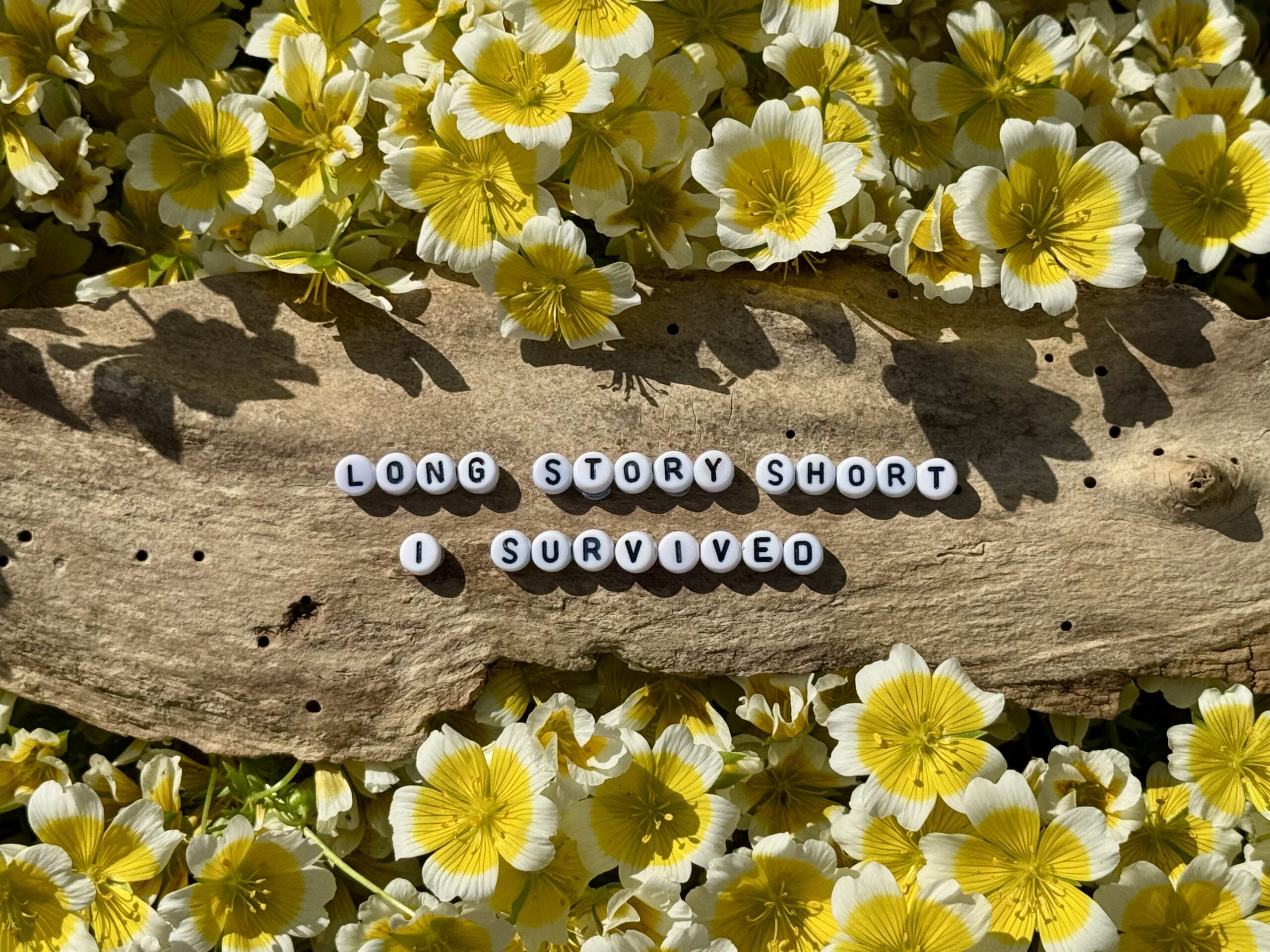
Long story short, I survived
A few weekends ago, I went to a friend’s 40th birthday party.
This isn’t a post about personal growth, lessons learned, or silver linings. It is a raw diary entry of my reality. This is what actually happens when you live with Post-Concussion Syndrome (PCS) and try to do something as normal as attending a birthday party.
I chose to go because I knew my friend would appreciate me being there, and she’s a dear friend. It was the first time I had been out since developing PCS over two years ago. She was incredibly surprised to see me; everyone was.
On paper, the party was low-key: a small group in a “quiet” wine bar with cheese and nibbles. But there is nothing “quiet” when you live with PCS.
To secure just two hours of “normality” with my friends, I had to spend the entire week preparing for it. I intentionally didn’t book anything that week. I cleared my schedule of all appointments to protect my limited energy. Most days, while my kids were at school, I rested and took naps. I was trying to build a buffer against the inevitable crash. This wasn’t an anxious response. It was simply necessary pacing. I was just realistic about how much the night would drain me.
Then, I arrived.
Immediately, the background noise, music, and overlapping voices completely overwhelmed my brain. I felt disconnected and floating, unable to process conversations or even maintain eye contact. The physical effort required for those basic actions was just too much for my brain to handle. I guess I was living in the lyrics of this is me trying,
“And it’s hard to be at a party when I feel like an open wound.” 1
I broke my own rules and chose to mask. I decided, as Taylor sings:
“And if I bleed, you’ll be the last to know.” 2
I asked simple questions to appear engaged while my brain secretly fought to survive the room. I smiled, laughed, and raised a glass. I pretended to enjoy the alcohol-free champagne since I couldn’t join the wine tasting. As the night went on, my headache grew, and the nausea that came with it became so intense that the only way to fight it back was to keep eating cheese crackers.
The irony was painful: I hadn’t touched a single drop of alcohol, yet the sensory overload made me feel completely, physically drunk. It was that exact sensation where your body occupies a space, but your brain is completely gone. Out of body. Floating. Unable to concentrate. That was me for the entire night. I was entirely sober, yet my mind was completely disconnected from reality.
After two long hours, I could no longer cope with the sensory overload, the headache, the nausea, and the floating, and so I left.
The day after the party, I paid the price. And so did the day after that one, and the one after that.
For three whole days, I struggled through a permanent, exploding headache and deep nausea. The rocky, floating sensation refused to disappear. I was trapped in a heavy cognitive fatigue, the kind that leaves you with just enough energy to cook porridge for your kids at dinnertime. A raging tinnitus rang constantly in my ears. The brain fog was so dense that it stopped me from forming simple sentences; even my three-year-old daughter kept correcting me. The day after the party, my husband had to take the kids out of the house twice because my brain could not cope with their laughs and cries.
The parallel to alcohol was even scarier the following morning. Just like the morning after a night of heavy drinking, I could barely remember the conversations or the “fun” from the night before. The details were completely gone, wiped clean by cognitive exhaustion. I was there, but my brain didn’t record any of it.
This “sober hangover” or “Post-Concussion hangover” is a living reminder of my new normal. My reality now requires exhaustive preparation and leaves zero room for spontaneity. And not only that, PCS means I cannot enjoy a simple birthday party without experiencing the worst symptoms and the worst crash in the following days.
The emotional weight caught up to me, too. On the drive there, I was near tears. I was in total disbelief that I hadn’t been out for a whole two years. By Saturday, the grief felt much worse than the day before. Dealing with the physical pain was exhausting, but the invisibility of PCS added a different kind of ache. It is incredibly lonely to experience such a severe neurological crash when you know that, to the outside world, you look perfectly healthy.
It was a deep sadness because it also brought absolute clarity about my limits. If those were the consequences and implications of attending a low-key birthday party for two hours, how was I supposed to return to a teaching job?
I cannot say that the night was fun. Was it worth it? I am not really sure. Could I have gained more from going for a walk with my friend? Absolutely. Will I be doing it again anytime soon? No, I won’t. When I do step out again, it will be because the crash is worth the cost. But that is a thought for another time.
Taylor summarises perfectly the reality of a night out with Post-Concussion Syndrome in evermore:
“long story short, it was a bad time
long story short, I survived.” 3
The Concussion Girl
- Swift, Taylor. “this is me trying”, folklore. Taylor Swift, 2020 ↩︎
- Swift, Taylor. “Cruel Summer”, Lover. Taylor Swift, 2019 ↩︎
- Swift, Taylor. “long, story short”, evermore. Taylor Swift, 2020. ↩︎
Comments
Well done for sacrificing yourself to show your friend how much they mean to you. It may not have been worth the crash but it made a lasting memory for them. xx
Thank you. xx
As Taylor says, ‘At least I’m trying!’ 🙂
Thanks for the post. We can really “understand” what you are going through.
Thank you. Writing it out was a way to make the invisible a bit more visible, so I really appreciate you taking the time to read it and connect with it ❤️.