
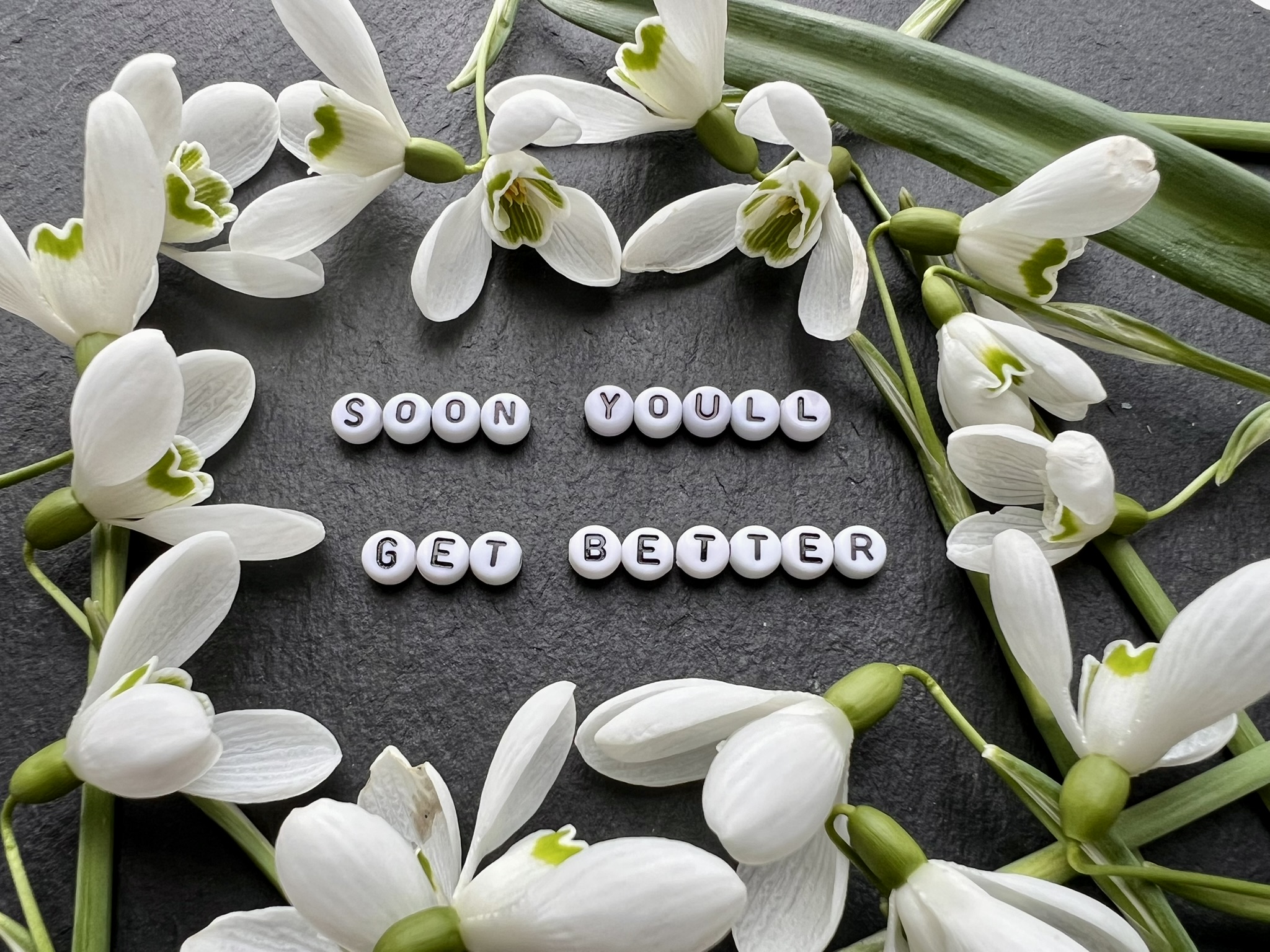
Soon You’ll Get Better
“Ooh-ah, soon you’ll get better
Ooh-ah, soon you’ll get better
Ooh-ah, you’ll get better soon
‘Cause you have to.” 1
Soon You’ll Get Better, from Taylor Swift’s 2019 album Lover, focuses on themes of hope and desperation following her mother’s cancer diagnosis. Because the subject matter is so heavy, it is one of the few songs Taylor excluded from the Eras Tour, as she has stated it is too emotionally difficult to perform live.
During the pandemic, I often turned to this song while a close friend – a father of two – struggled with long-COVID. I kept thinking of him, wanting so badly to reach out and tell him, “You’ll get better soon, ’cause you have to.” Today, I hear those lyrics through a new lens. They have become my children’s prayer for me; I need to recover from this concussion because I have to for them.
One of the most difficult parts of my recovery has been the way this injury has reshaped my identity as a mother. When the accident happened, my children were only 1 and 3; I was still breastfeeding my youngest, who hadn’t even started walking yet. In many ways, my role as a mum was what first alerted me to the fact that something was seriously wrong.
The non-stop noise of the kids, from their giggles to their meltdowns, became physically uncomfortable. Simple movements, like crawling on the floor to help my daughter or searching for toys, left me dizzy and disoriented. Our normal routine became impossible to maintain. Thankfully, their early bedtime was my daily lifeline, but that didn’t stop me from reaching breaking point every night. By then, I was so depleted that I spent every evening resting, unable to connect with my husband or enjoy my sewing hobby.
Reading to them became a struggle, as the visual focus triggered nausea, cognitive fatigue, and headaches. I vividly remember one morning when the kids began tidying up their Duplo; the sound of the plastic bricks hitting the boxes was so unbearable that I had to ask my husband to take them out of the house. I couldn’t cope with the sensory input anymore.
We soon learned that I had to pace myself as a mother, which meant my husband had to take on an even greater share of the childcare. For a long time, this left me feeling shattered. I could come to terms with losing my teaching career, my ability to sew, or my morning runs. I was okay with losing my spontaneity and social life. But being forced to “adapt” my role as a mother because of my injury was devastating.
When I spoke to medical professionals about it, their primary advice was to start antidepressants. The recommendation left me enraged and heartbroken; it felt like a total misunderstanding of my reality. I didn’t need a prescription. I needed to be able to watch my children on the swings without feeling dizzy. I needed to read bedtime stories to them without the words triggering nausea or a pounding headache. Most of all, I needed the energy to feel like the mother I knew I could be without having to collapse on the sofa the moment I finished playing with them or completing basic household chores.
My husband has always stayed positive. His motto is that we can adapt to any change, and he has been the cornerstone of our family’s success despite my injury. Together, we learned how to shape our lives around these new, difficult limitations.
We learned that I had to prioritise self-care because you cannot pour from an empty cup, and mine was completely dry. I had to learn that resting during a concussion isn’t laziness; it is brain healing, and it’s the only way to be there for my children in the long run.
This was emotionally difficult. My son would often cry and scream, asking why I wasn’t going to the park with them again. Every time he did, I sat on the sofa feeling broken and guilty that I wasn’t with him. But my husband kept reminding me that this rest was the only way I could be a better mum for the rest of the day.
I also learned that I couldn’t do everything I once did, like playing with the kids, cooking dinner, and managing the bedtime routine all in one go. As a result, my husband eventually reduced his commitments to provide extra support. We also learned that we had to find practical solutions to keep our family running while I healed.
For example, I’ve replaced reading aloud with audiobooks we enjoyed while looking at pictures together. We started following a weekly meal plan, so my husband could help without me needing to make the decisions. By switching to fortnightly online food shopping, I avoided the overwhelming task of going to the supermarket and instead focused on being present with our kids. We even reframed screen time as a guilt-free win, using it to develop our kids’ bilingual skills.
My husband would also check in with me throughout the afternoon to see what I could handle. If I were nearing a crash, he would step in to handle the physical demands of dinner or bath time. This allowed me to save my remaining energy for a quiet moment on the sofa with the kids rather than pushing myself past my limit.
I also learned to be selective about my children’s social activities. For instance, I rarely attend birthday parties because the sensory overload isn’t worth the inevitable “crash.” Instead, I save my energy for things I don’t want to miss. I also discovered that outdoor settings were much easier to manage than indoor ones, so if we meet friends, I join for the outdoor play but skip the indoor gatherings.
These strategies reaffirmed that the point of every adjustment was to ensure I still had quality time with my children, even if it looked different than before. By pacing myself and choosing my moments, I could still be the mother I wanted to be without compromising my recovery.
I still have a lot to learn about being a mother while healing from a concussion. The last two years have been a rollercoaster of emotions as I’ve navigated this new identity. I know I still have work to do when it comes to pacing – the truth is, it’s incredibly hard work. I’m still learning how to be a present mum while still being mindful of my recovery. However, I now feel more confident, content, and in control.
Every time I hear the line, ‘You’ll get better soon, ’cause you have to,‘ it no longer feels like a desperate plea. My kid’s prayer for me has become my mission. I’ll get better, not because it’s easy, but because I have to.
“Ooh-ah, soon you’ll get better
Ooh-ah, soon you’ll get better
Ooh-ah, you’ll get better soon
‘Cause you have to.” 2
The Concussion Girl
- Swift, Taylor ‘ Soon You’ll Get Better,’ Lover. Taylor Swift, 2019. ↩︎
- Swift, Taylor ‘ Soon You’ll Get Better,’ Lover. Taylor Swift, 2019 ↩︎