
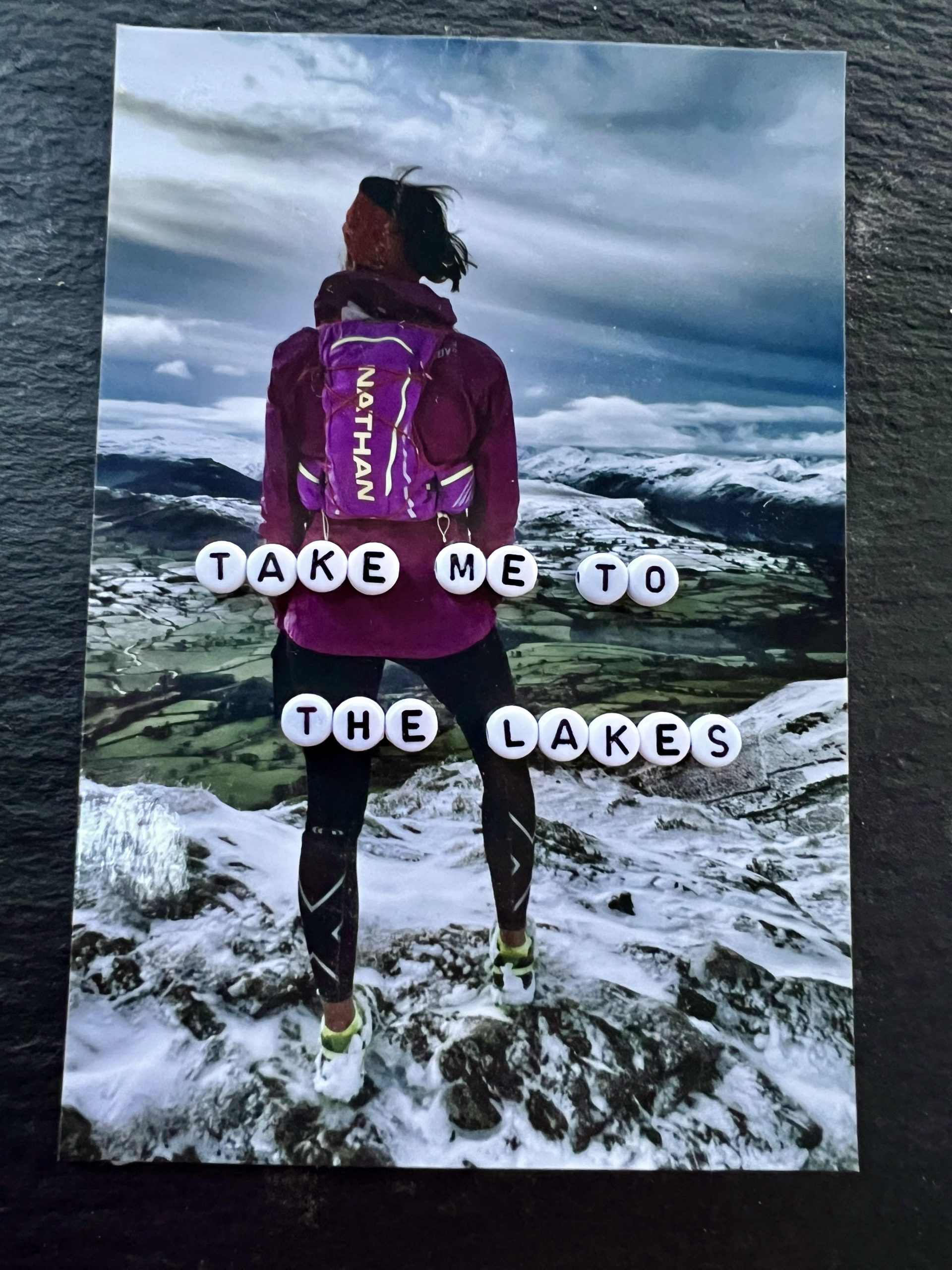
take me to the lakes
“Take me to the lakes where all the poets went to die (…)
Those Windermere peaks look like a perfect place to cry.” 1
When Taylor Swift released the lakes in the summer of 2020, I was beyond excited. My family and friends immediately started texting me because they knew she’d written a song about my favourite place in the world. For those who don’t know, the Lake District is a National Park in Northern England. It’s an area of outstanding natural beauty where the fells and the water meet. It was incredible to see it get that recognition from my favourite songwriter.
In the Lakes, the weather can be wild and grey. Both ‘miserable’ and ‘magical’ describe the feeling you get when you are on a fell – the local name for the mountains. It’s gloomy and bleak, but mystical and glorious at the same time, and that’s exactly what gives the landscape its power. That atmosphere is exactly why poets like Wordsworth and Coleridge, and authors like Beatrix Potter, lived there. They found a sense of spiritual power in the dramatic landscape. To me, Taylor’s song is a modern take on this traditional legacy. She captured the soul of the Lakes that has captivated writers for centuries.
For that same reason, the Lakes is my spiritual home too. When I’m on the fells, I feel a profound closeness to God; I feel His presence all over me. Because of this, I’ve always found peace and enjoyment in fell walking and running.
However, my connection to the fells has changed since the accident. Now the terrain presents a huge challenge. I struggle to maintain balance on rough ground, often leading to falls and sprained ankles. Once I hit 400 metres above sea level, I experience intense visual vertigo, dizziness, nausea, head pressure, and a sense of tilting, which makes me feel disoriented and uncertain. The constant movement of rain, shifting clouds, and flowing rivers, combined with the roar of the wind, makes me feel disconcerted. It creates a sense of floating, as if my head is completely disconnected from my body.
The level of concentration required to keep myself upright leaves me completely exhausted too. When a friend joins me, the mental load doubles; balancing the terrain and following a conversation feels like an impossible feat. I often return home utterly depleted. Yet, despite the extreme fatigue and physical toll, I continue to go back, even if I can’t go as often or for as long as I’d like. The struggle is worth the price because the power of nature remains the only thing that truly heals my soul.
I know that being outdoors and exercising is vital for my recovery. Every run reinforces my vestibular rehabilitation; it forces my brain to track movement, rotate my neck, and adapt to my continuously moving visual field. Beyond the mental health boost, exercise also triggers the release of BDNF (brain-derived neurotrophic factor), which helps repair cells and build the new neural pathways essential for my healing.
Most importantly, being in nature reminds me of the ‘old’ me. Despite losing my job, being unable to sew, and feeling like I’ve somehow lost part of my identity, the fells are a testament to the fact that I can still connect with my true self.
I’m still learning to find a sustainable balance with exercise. While living near Stockholm, I learned the Swedish concept of lagom – meaning ‘just the right amount.’ In the Lakes, the temptation is always to go higher and further. But concussion recovery requires a different philosophy. I know that overexertion exacerbates my concussion symptoms, yet avoiding activity damages my mental health. My goal now is to find that middle ground that supports my well-being and allows me to progress without causing a setback.
I’ve found that the powerful beauty of nature is exactly where my soul and my brain find the strength to heal. Just as the poets and Taylor found inspiration in the gloom and the glory of the Lakes, I find my strength in the very landscape that challenges me most.
The Concussion Girl
- Swift, Taylor. ‘the lakes’, folklore. Taylor Swift, 2020. ↩︎