
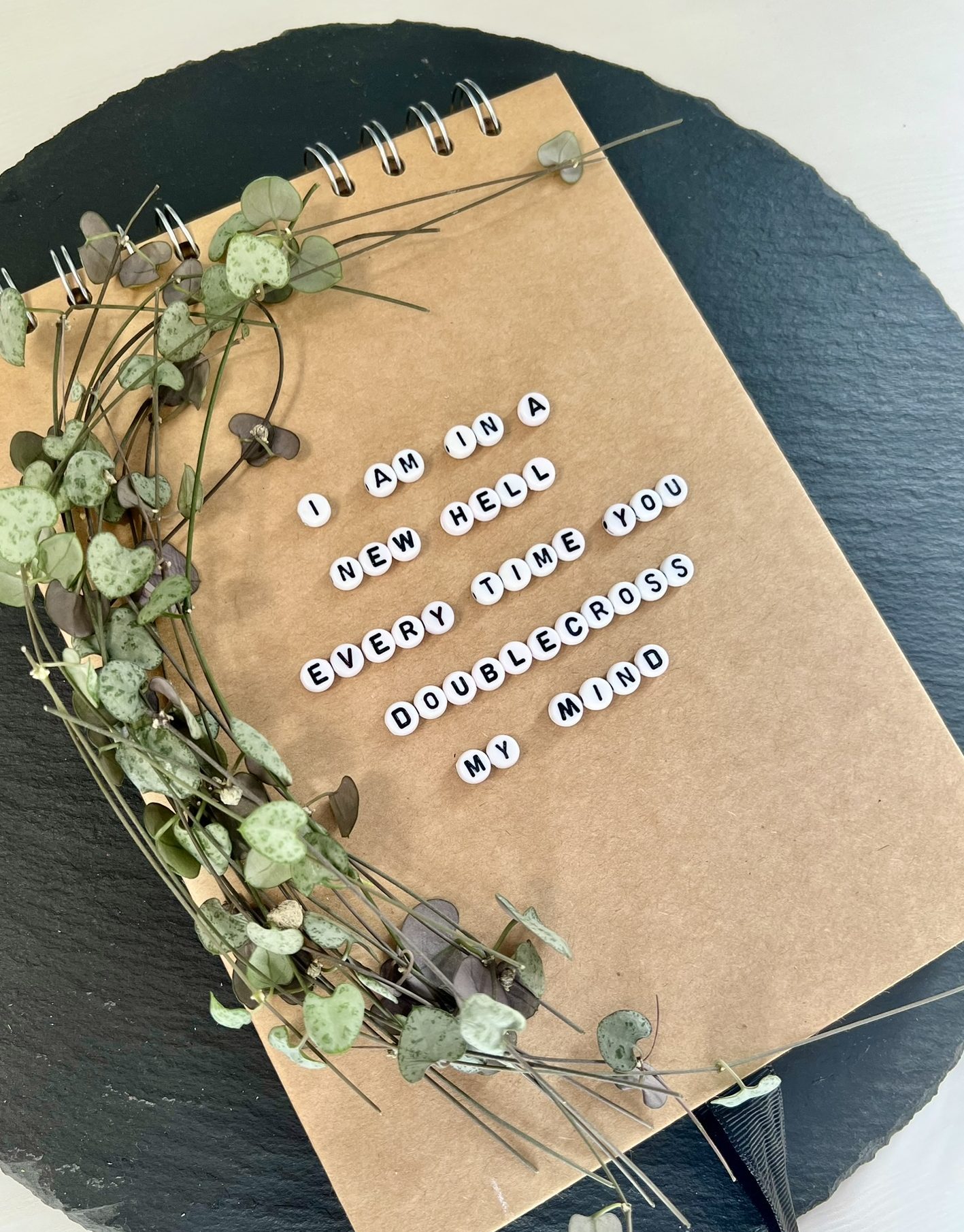
I’m in a new hell, every time you double-cross my mind
Since starting my concussion recovery, I’ve found that so many of Taylor Swift’s tracks resonate with the complex feelings I carry regarding my medical treatment. While I’ve been fortunate to work with many compassionate professionals who have been vital to my recovery, I have also faced treatment that left me feeling silenced and dismissed.
Dealing with post-concussion syndrome (PCS) is exhausting, but being dismissed by the people meant to help adds a layer of medical gaslighting that is hard to put into words. This persistent dismissal has evolved into a secondary trauma, forcing me into a ‘double recovery’: I am healing from a brain injury while simultaneously processing the emotional toll of the medical system.
Taylor’s music has provided the framework for processing this frustration. Her lyrics have become the anchor I have used to navigate my medical trauma and reclaim my agency. Here are the songs that helped me survive medical gaslighting, stand my ground, and rebuild my voice.
“And you call me up again just to break me like a promise
So casually cruel in the name of being honest
I’m a crumpled up piece of paper lying here
‘Cause I remember it all, all, allThey say all’s well that ends well, but I’m in a new hell
Every time you double-cross my mind” 1
To cope with the exhausting trauma of dismissive medical appointments, I have leaned on these lyrics. They perfectly capture the haunting nature of medical trauma, highlighting the pain when a doctor dismisses your symptoms in a ‘casually cruel’ way, ‘in the name of being honest.’
It also reflects the never-ending, emotional pain that you experience when you ruminate about past dismissive comments from doctors when they ‘double-cross’ your mind, creating a ‘new hell’ of self-doubt. This ‘new hell’ makes every new appointment a battle where you’re fighting not just for your health, but for the right to be believed.
Medical gaslighting tries to make you doubt your own reality, but these lyrics offer a way to define your story. The words ‘I remember it all, all, all,’ remind me that they cannot take my truth – this is my story, and I am the only one who gets to write the final word on what I am going through.
“they told me all of my cages were mental
so I got wasted like all my potential
and my words shoot to kill when I’m mad
I have a lot of regrets about that (….)I just wanted you to know
that this is me trying.” 2
For so many of us living with PCS, these words cut deep. We often have been trapped in a cycle of being told that our symptoms are ‘just anxiety’, ‘in our heads’, as if we’ve built these psychological ‘cages’ ourselves. This lyric resonates because it captures the toll this behaviour takes on you – it’s exhausting having to defend your reality while you are fighting to survive. Additionally, it makes you defensive, which makes your words ‘shoot to kill’ whenever you feel ‘mad’ and unheard.
It’s a reminder that our struggle isn’t because you are not ‘trying’; it’s the trauma of being disbelieved while you are quite literally doing everything in your power to recover. Despite how it looks to the outside world, you are still here doing the invisible work of ‘trying’ to get better.
“You, with your words like knives and swords
And weapons that you use against me
You have knocked me off my feet again
Got me feeling like a nothing
You, with your voice like nails on a chalkboard
Calling me out when I’m wounded
You, picking on the weaker man (…)
I walk with my head down, trying to block you out
‘Cause I’ll never impress you
I just wanna feel okay again.” 3
Reading internal correspondence between doctors created an emotional distress I wasn’t prepared for. As I scanned the letters I’d been CC’d into, the lyrics from Mean felt literal. The doctors’ words felt like ‘knives and swords,’ and their dismissive opinions sounded ‘like nails on a chalkboard.’ By dismissing my physical suffering, they made me feel ‘like a nothing.’
When I was at my absolute lowest, most vulnerable, and ‘wounded’, struggling with a brain injury, I found myself being critiqued by the people meant to help me. Therefore, I had to consciously ‘block out’ their labels and opinions to survive and ‘feel okay again.’
“every time you call me crazy
I get more crazy
what about that?
and when you say I seem angry
I get more angryand there’s nothin’ like a mad woman
what a shame she went mad
no one likes a mad woman
you made her like that
and you’ll poke that bear ’til her claws come out” 4
This song perfectly illustrates the idea of a ‘difficult patient.’ When your symptoms are dismissed, your distress increases, but in the eyes of a doctor, that distress suggests that your physical symptoms are being caused by mental factors. You can never win. Medical gaslighting ‘pokes the bear’ until you react. This reaction is then used to further delegitimise your suffering, providing ‘evidence’ in your medical records that your issue is purely mental.
For those of us with PCS, this cycle is too familiar. It creates a profound isolation by the very people who are there to help us, but are the ones making us ‘mad’ in the first place.
“I protect the family
Leave it with me
I protect the family
Leave it with me” 5
These lines from Taylor Swift’s ‘Father Figure’ about ‘protecting the family’ hit different after I received a dismissive response to a formal complaint I made. Their reply perfectly mirrored the mafia-boss persona of Taylor’s lyrics, treating my grievance as a ‘scandal to cover up’ rather than a mistake to rectify.
It wasn’t just a dismissal; they manipulated correspondence to spin their narrative, mask their own failings, and shift the blame onto me. It was a clear message: the ‘family’ comes first; the patient is an outsider.
Through this gaslighting, they didn’t just fail to treat me; they dismantled my faith in the concept of care. I could almost see the Chief of the Trust leaning across a mahogany desk, whispering: ‘Leave it with me; I protect the family.’ Their choice to prioritise the ‘family’ over my health has left me drowning in an NHS I no longer recognise or believe in.
“I was tame, I was gentle till the circus life made me mean
Don’t you worry, folks, we took out all her teeth
Who’s afraid of little old me? Well, you should be
You caged me and then you called me crazy
I am what I am ’cause you trained me” 6Who’s Afraid of Little Old Me, The Tortured Poets Department
These words are the anthem for anyone who used to be a ‘compliant patient’ and has turned into a ‘disturbed’ one because they have persistently been ignored. It captures the moment you stop apologising for your anger and start using it to protect your story. There is truth in the line: ‘I am what I am ’cause you trained me.’
Chronic illness like PCS often turns us into people who want to ‘snarl’ to show how deeply ‘disturbed’ we have become because of the way we’ve been treated by the very institution that is there to make us better.
I could go on forever; Taylor’s discography is filled with tracks that helped me navigate the complex trauma of medical gaslighting. When the system dismissed me, her lyrics validated my reality and made me feel less alone in my pain.
Eventually, I’ll write about how her music helped me move past the hurt of these last few years, but I’m not there yet. I’m still lost in the ‘labyrinth’ of my own head, replaying the medical gaslighting – a loop I can’t escape.
I relate so deeply to the fear Taylor describes in Labyrinth – the haunting realisation that I might be ‘getting over’ the way I’ve been treated for the rest of my life.
“Breathe in, breathe through, breathe deep, breathe out
I’ll be getting over you my whole life” 7
I hope that by publishing this today, I’m taking my first step into the daylight. Until then, I hope sharing my story makes you feel a little less alone.
The Concussion Girl
- Swift, Taylor “All Too Well” 10MV, Red, Taylor’s Version. Swift, Taylor. 2021. ↩︎
- Swift, Taylor “this is me trying” folklore. Swift, Taylor. 2020 ↩︎
- Swift, Taylor “Mean” Speak Now. Swift, Taylor. 2010. ↩︎
- Swift, Taylor “mad woman” folklore. Swift, Taylor. 2020. ↩︎
- Swift, Taylor “Father Figure” The Life of a Showgirl. Taylor Swift, 2025. ↩︎
- Swift, Taylor “Who is Afraid of Little Old Me” The Tortured Poets Department. Swift, Taylor. 2024. ↩︎
- Swift, Taylor “Labyrinth” Midnights. Taylor Swift, 2022. ↩︎