
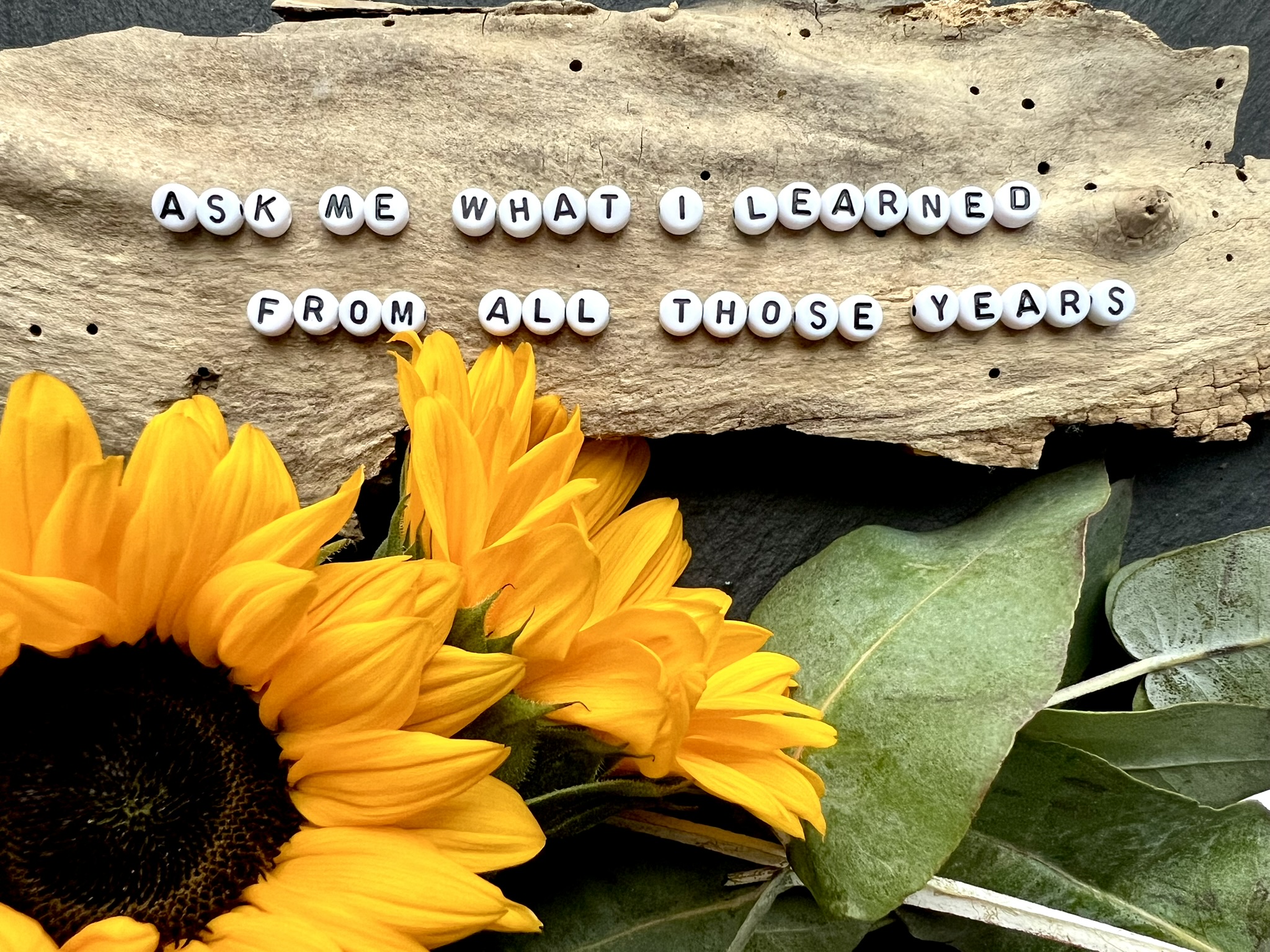
Ask me what I learned from all those years
The lyrics that have inspired this post are from Swift’s Karma song. Karma is such a cheerful, fun, and upbeat song from her Midnights album, in which she talks about the satisfying feeling that karma will reward those who do good while punishing those who cause harm. It’s also a song about self-reflection, showing that she’s grown, developed resilience, and gained self-confidence from a very traumatic experience. On the bridge, she reflects on this journey.
“Ask me what I learned from all those years
Ask me what I earned from all those tears.” 1
In that same way, I have also reflected on the many lessons I have learnt from my years and tears as a concussion patient.
If I could go back to the start of my journey, these are the five pieces of advice I would give myself to make my recovery smoother and faster.
1. Educate Yourself – Listening to specialist concussion and vestibular podcasts has been crucial for helping me to realise that I needed to be more proactive when advocating for myself. These podcasts have explained many technical and medical words that I have been able to use or understand in medical appointments. They’ve also reinforced the idea that ‘I am not alone’ and that my symptoms are not ‘just in my head’ and that navigating the healthcare system, when it comes to such complex symptoms, is very challenging and confusing. They’ve also given me hope that there is help out there and I can get better, which has made me feel calmer and therefore reduced my anxiety. Overall, educating myself has been the first step toward effective medical advocacy, turning me into an active partner in my own health journey. Head to ‘My Personal Podcast List‘ on the sidebar to find the podcasts that I have found the most useful.
2. Document your journey through photos and videos – I started doing this a year after the accident, partly because I love photography and it helped me to be creative, but partly because I was getting frustrated when trying to explain symptoms or triggers to doctors and being dismissed. These pictures became my bridge to the communication gap that I was struggling with. I took pictures of environments that triggered my symptoms, such as floorings with visually complex patterns, supermarket aisles, tunnels, moving water, escalators, etc. Anything that triggered my visual vertigo, I took a picture of. I also recorded myself completing vestibular rehabilitation exercises to show the extreme nausea that I would develop when turning my head to the right. Doing this helped me to capture medical professionals’ attention, provided objective validation that my symptoms were/ are real, and gave me a sense of purpose.
3. Keep a simple sleep diary – I struggled with the daily symptom and diet diaries suggested by my occupational therapists. It felt like ‘just another job’ on my to-do list, and I couldn’t see the payoff. However, keeping a simple sleep diary was a turning point. It helped me distinguish between a clinical sleep disorder and the reality of life with kids; I realised it wasn’t just a neurological issue keeping me awake, it was often my children waking me up. I kept it simple by using a traffic light system to score my sleep. This diary became an objective piece of evidence that I shared with my GP. It allowed us to prove that poor sleep wasn’t the main driver of my lingering post-concussion symptoms, helping us look deeper for the real cause.
4. Bring a support person to all your appointments – I didn’t do this for a long time because we were finding it tough to arrange childcare for each appointment. However, after so many difficult appointments, I realised that we had to make this a priority. A companion provides more than just emotional support; they are your second brain when brain fog sets in. They can keep the conversation professional, offer an objective ‘outside perspective’ on your symptoms, and ensure the hard questions get asked when you’re too exhausted to speak up.
5. Waiting lists are long, so be proactive and ask your GP for early referrals – I have to admit I never asked for any referrals at the start of my journey. All the doctors said I would get better over time, so there was no point in making them. With hindsight, I wish I had asked them to make them as a precautionary measure. If you do feel better by the time the appointment comes, you can always cancel it. I was referred to ENT eight months after my injury, and then was on the waiting list for fourteen months until a specialist finally saw me. Early referrals can be the key to a faster recovery.
If I’ve learned anything, it’s that doing nothing isn’t going to help me get better, but self-advocacy is. I hope you can use these lessons to bridge the gap between where you are and where you want to be.
The Concussion Girl
- Swift, Taylor. ‘Karma,’ Midnights. Taylor Swift, 2022 ↩︎