
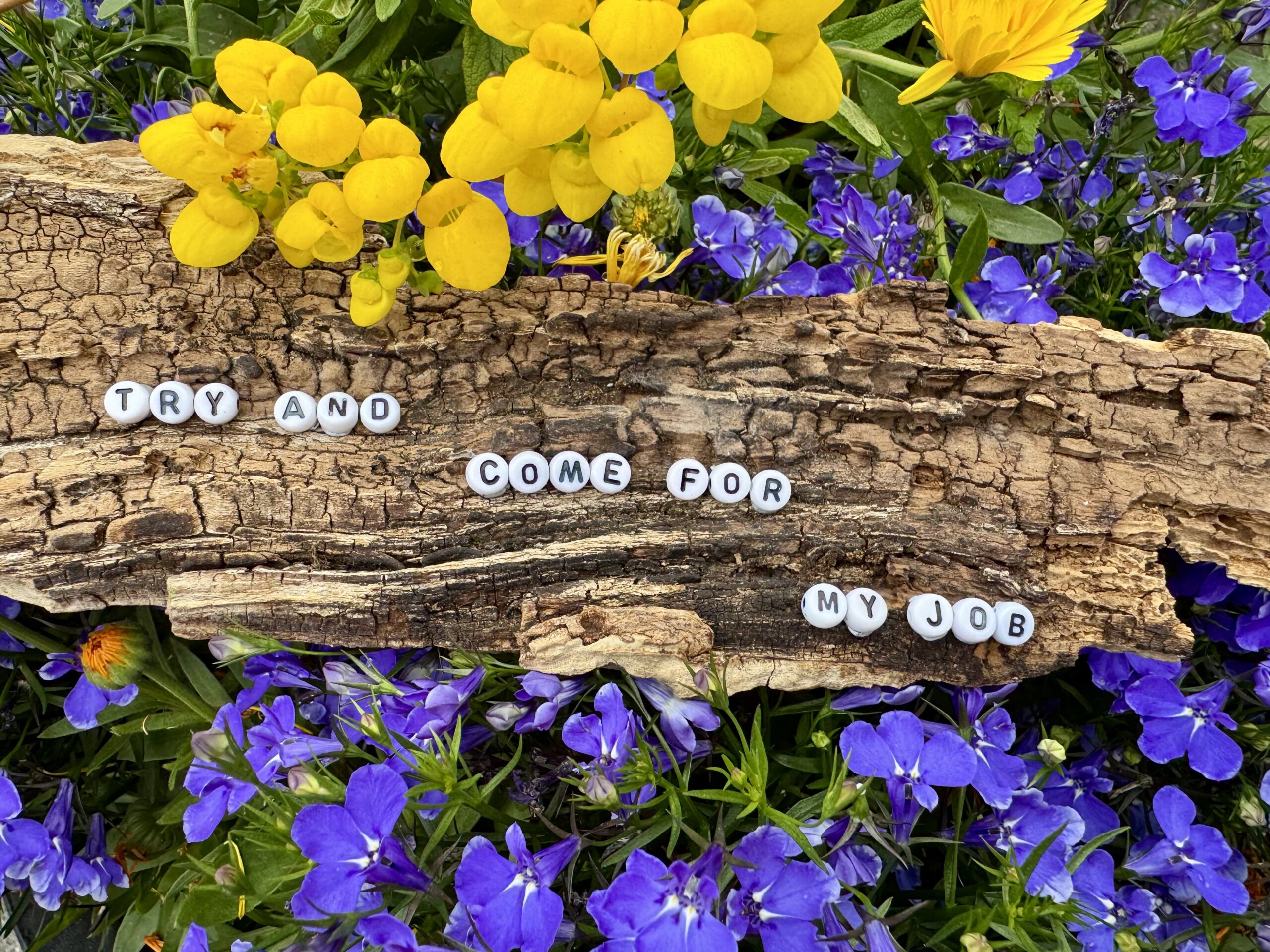
Try and come for my job
A few days ago, I was talking to someone about sourdough baking. I mentioned that while it isn’t really a high-maintenance hobby, it does require you to be around, especially during the 48-hour lead-up to the bake.
They responded that, of course, it suited me since I didn’t have anything to do.
Ouch. That really stung.
I guess the comment hurt for two reasons. First, it exposed how society completely fails to give credit to any labour that doesn’t come with a salary. Second, and much closer to home, it cut deep because, if anything, my actual workload has been incredibly heavier ever since I developed Post-Concussion Syndrome (PCS).
It’s true that I don’t have a traditional job right now, the kind that comes with a regular salary at the end of the month. But it is a massive stretch to claim I have nothing to do. Let’s be clear: every single day, I simultaneously manage three massive, critical roles that demand immense energy, constant strategy, and relentless resilience.
I won’t dive into the first two roles I continue to perform daily despite my injury, which include the endless demands of parenting, being a wife, running a household, and being an educator. But I want to look closely at the third role: the unwanted, unremunerated full-time job I am currently trapped in. The gruelling, exhausting work of recovering from an mTBI and PCS. It is, easily, the hardest job I have ever had.
So, what does my daily schedule look like as an mTBI-PCS recovery patient?
Unlike most jobs, this job is 24/7, 365 days a year. There are no weekends, no holidays, and no leaving the office or the classroom. Every morning I wake up to the same objective: retraining my broken neurological “software” to function correctly again, all while managing a continuous, invisible crisis.
Here is the true breakdown of what my daily workload requires:
- Symptom Management & Pacing: I’ve shared glimpses of this before (see ‘It’s all just a blur’ and ‘long story short, I survived’), but my daily routine requires a continuous, relentless balancing act between managing my debilitating symptoms and attempting to rehabilitate my damaged brain. I have to pace myself physically, mentally, and emotionally, resting just enough to recover, while simultaneously exposing my brain to triggers to force it to rewire, but stopping before I have a total crash. It means doing enough to feel involved and keep the mum guilt under control, but not so much that it completely wipes me out.
- Physical & Vestibular Rehabilitation: A massive part of my daily workload involves completing Vestibular Rehabilitation Therapy (VRT) to treat my PPPD (Persistent Postural-Perceptual Dizziness) and vestibular migraines (VM), alongside targeted exercises for my whiplash injury that I still struggle with. These exercises trigger intense dizziness and nausea; without a doubt, they are the most unpleasant part of my day.
- Physical Exercise: Movement is medicine for an mTBI. This task requires immense concentration, which often wipes me out for an hour afterwards. However, it is non-negotiable; it creates the environment needed to support neuroplasticity, while serving as a crucial part of my mental health.
- Nervous System Regulation: Over the last two years, I have learned to commit dedicated time to targeted breathwork to calm my hyperactive fight-or-flight response alongside visualisation techniques to help my brain navigate the disorientation of PPPD. I tend to do this work out in nature, where the environment encourages healing. Consequently, escaping into the natural world is another crucial part of my daily recovery.
- Medical Appointments: I still have at least two appointments every week with either my GP, vestibular physio, audiologist, MSK physiotherapist, or psychologist. In the past, I also faced specialist appointments that required long, exhausting journeys across Northern England. Worse than the travel was the painful burden of medical gaslighting from professionals who failed to recognise my illness. Consequently, each appointment triggered a devastating domino effect on my mind and body, draining the energy I required to manage my daily life.
- Nutrition and Hydration: Fuelling this recovery is a full-time job in itself. I have to constantly watch my water intake just to keep my brain hydrated enough to heal. I also stick to an anti-inflammatory, brain-supportive diet to help my body repair. Staying consistent every single day takes massive discipline.
- Research & Self-Advocacy: I spend hours educating myself on mTBI science through podcasts. Complex conditions like PCS, PPPD, and vestibular migraines are deeply misunderstood by general practitioners and specialists in the UK. Because I cannot simply rely on a standard medical opinion, I must continuously research just to fight for my own healthcare.
- Emotional Regulation: Processing the emotional side of chronic illness is easily the most challenging part of my job. It means constantly navigating feelings of isolation, being deeply misunderstood, and perpetually having to explain yourself to others.
- Rest: Last but not least, rest is no longer a luxury or a reward for finishing tasks. Rest is a non-negotiable requirement for survival and healing, so I can actively enjoy my life. It is, without a doubt, one of the most important parts of my job, even though it might look like idleness to some. True rest means actively letting my brain repair, making it the most productive thing I can do each day.
So overall when I look at the immense energy, strategy, and resilience required just to survive the day, I don’t see a void of empty time.
I see a job.
I get it; it is an unconventional one. Society may only recognise and validate the kind of work that comes with a financial salary. But waking up every single day to rebuild your own brain from the ground up is definitely a full-time role.
So to anyone who looks at my life and assumes I don’t have anything to do because I bake sourdough bread or don’t have a traditional job, I point to Taylor’s defiant declaration on The Tortured Poets Department:
“Try and come for my job.” 1
The Concussion Girl
- Swift, Taylor. “I Can Do It With A Broken Heart”, The Tortured Poets Department. Taylor Swift, 2024. ↩︎