
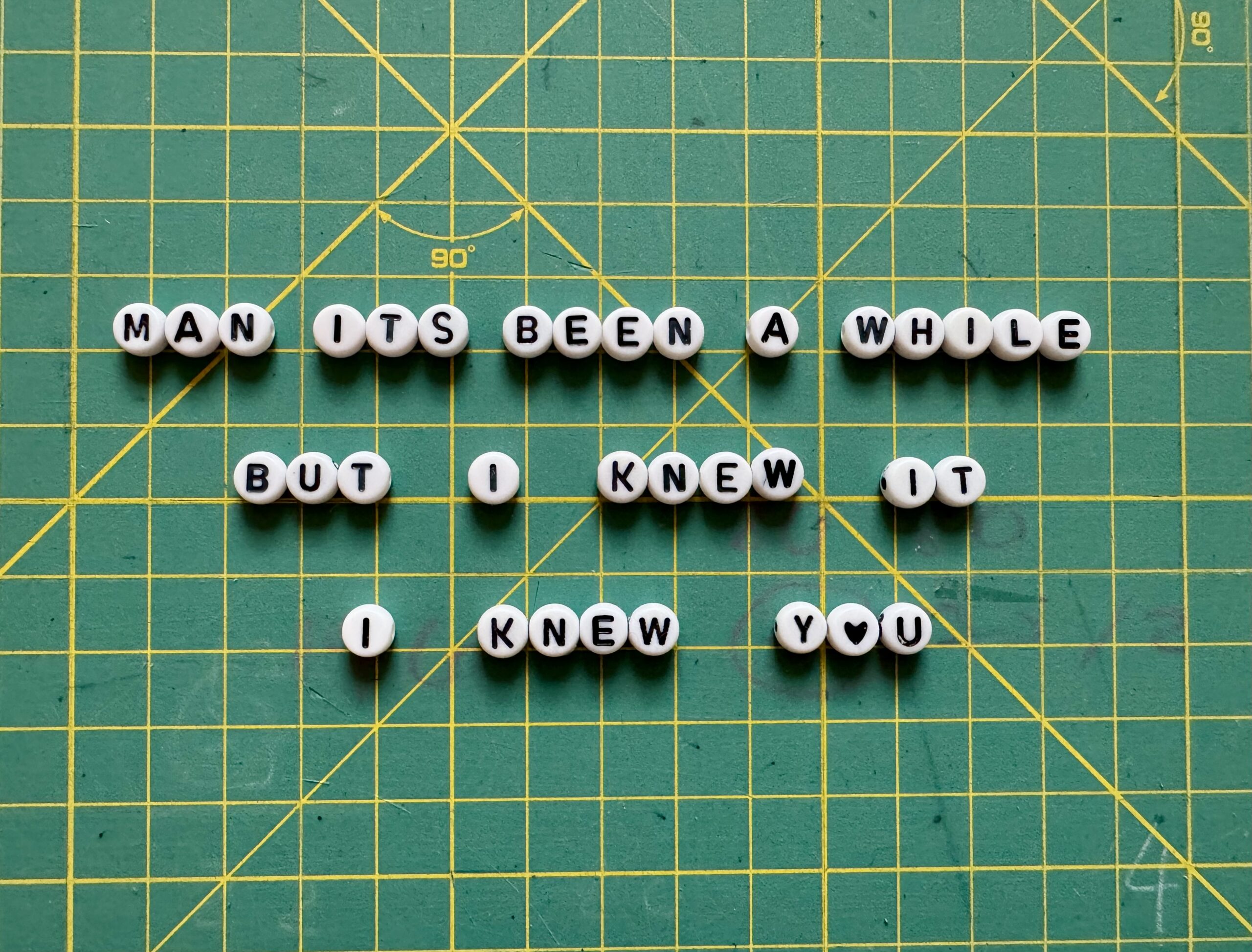
Man, it’s been a while. But I knew it, I knew you
One of the biggest frustrations that came as a result of my concussion was losing my ability to sew. I used to be an active sewist, regularly making my own clothes, especially the dresses I wore to work. However, once my symptoms started, I quickly realised sewing had become the perfect storm for triggering my symptoms.
The intense concentration required constantly exhausted my brain. Bending my neck to cut fabric or guide it through the machine triggered pain from my whiplash that radiated to other parts of my body. On top of that, the rapid movement of the needle, the noise of the machine, and the bright lights overloaded my brain, and this sensory overload consistently ramped up my dizziness, headaches, and fatigue.
Very soon after I was diagnosed with Post-Concussion Syndrome, I realised that my days of being creative, making dresses, and dreaming of a post-teaching sewing career had suddenly stopped. It was a heartbreaking moment, and these lyrics became my own lived experience:
“Life has ways of leaving those days behind.”
My sewing room quickly became a space where nothing happened. For a long time, I walked past it and consciously chose not to look inside. It just hurt too much to accept that the hobby that once filled my creative spirit and soul was no longer there.
To fill that void, I learned to bake sourdough bread, but baking never stopped my deep love and longing for sewing. Deep inside, I knew that the silence in my sewing room wasn’t going to be forever because I knew that:
“Love has ways of bringing things back to life.”
Driven by that love, I finally felt able to return to my sewing machine this year, and I intended it to be part of my rehabilitation. This huge step was made possible by the two years I spent educating myself through concussion podcasts, which taught me that true recovery requires slow and careful exposure to my triggers. But education alone didn’t get me here. Stepping away from the constant medical cycle and setting firmer social boundaries was truly what gave me the energy, time, and mental space to challenge myself.
But what began as a simple rehabilitation exercise quickly evolved into something much larger when I decided to turn data into ART, rehabilitation into ADVOCACY, and pain into a MASTERPIECE, telling my concussion story through a patchwork quilt.
To make this invisible struggle visible and to translate this complex medical journey into a piece of advocacy, I needed a structured way to show my daily reality. I found my answer by adapting the concept of temperature quilts. Instead of tracking the weather, my design tracks my health and other variables that affect my symptoms across three specific days each week. Together, that data creates a beautiful patchwork “concussed brain.”
My intention is to create three “concussed brains” each week. Why only three? Because I am very careful with my pacing, and I have to ensure this project doesn’t derail the very recovery it tracks. I chose Saturdays, Tuesdays, and Thursdays because they capture the rhythm of my week: a chaotic weekend with both of my kids, a mid-week day with just one child, and quiet days at the end of the week dedicated entirely to rest.
To tell this story visually, I’ve chosen specific colours to represent the different layers of my daily life with a concussion. Greens track the intensity of my symptoms. Browns show the severity of the weather, which remains one of my biggest physical triggers. Pinks reflect my children’s energy and behaviour, which deeply affects my day-to-day health. Additionally, the embroidery thread reveals my fatigue level; the darker the thread, the more fatigued I am.
Together, these individual patchwork pieces will form a beautiful quilt featuring over 100 brains, a project I have titled The Visible Concussion Quilt.
Ultimately, this quilt will hang in my GP’s waiting room – although they don’t know it yet! The aim is that it will help validate other patients’ invisible struggles and show people what living with a concussion actually looks like. It is also my way of helping me process and heal from the medical trauma I still carry – a bridge to finding peace and rebuilding trust with practioners.
So this September, with the design finally clear in my mind and my mum and sister’s help selecting fabrics and brain designs, the time came to face the room I had avoided for so long, and I took that step and went back inside. Sitting at the machine for the first time felt like a long-awaited reunion with an old friend, and the only words that came to mind were:
“I remembered I loved you
Came back when it mattered, I saw you
Standing there in the light of the window
Wearing that same smile.”
I am finally back where I belong, doing what I love, and making the invisible visible. I am not just sewing fabric together; I am literally stitching my recovery and resilience into a masterpiece.
After everything I have been through and how long it took me to get back here, I can finally say:
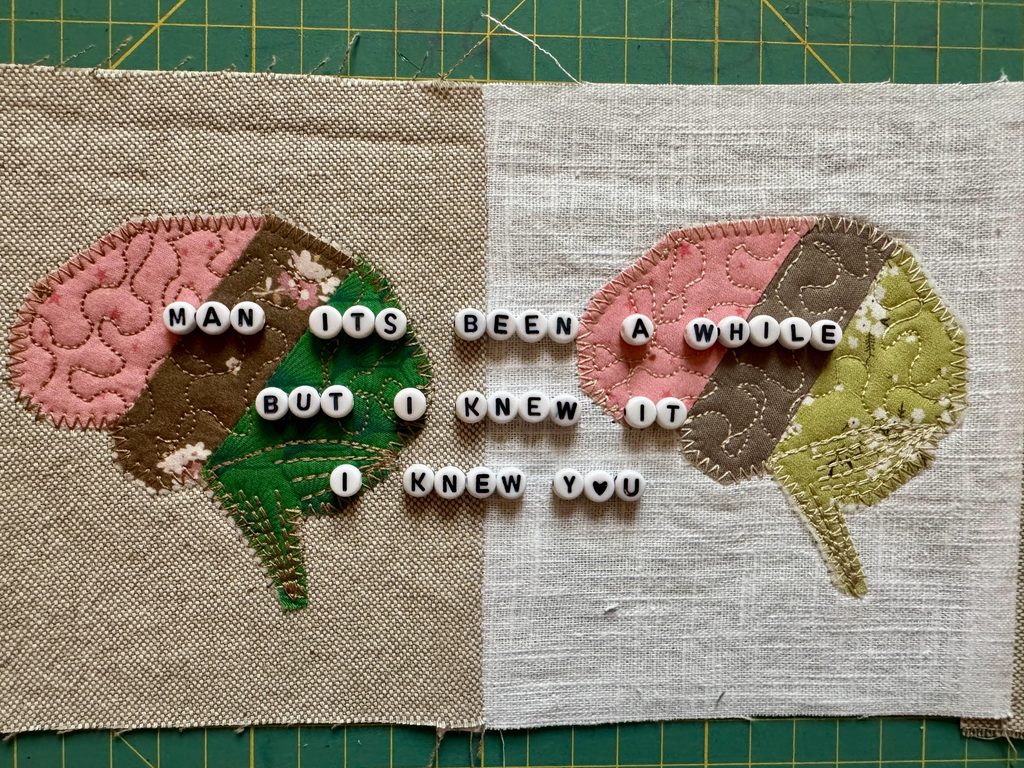
I Knew It, I Knew You, Toy Story 5 4
The Concussion Girl
- Swift, Taylor. “I Knew It, I Knew You.” Toy Story 5. Taylor Swift, 2026 ↩︎
- Swift, Taylor. “I Knew It, I Knew You.” Toy Story 5. Taylor Swift, 2026 ↩︎
- Swift, Taylor. “I Knew It, I Knew You.” Toy Story 5. Taylor Swift, 2026 ↩︎
- Swift, Taylor. “I Knew It, I Knew You.” Toy Story 5. Taylor Swift, 2026 ↩︎
Comments
Man it has been a while.
So pleased to have you back in your sewing room. Even if its just for short stints
So proud of you and how you are working through it all
jx
I knew it that you would like this one!
Well done! That’s the spirit