
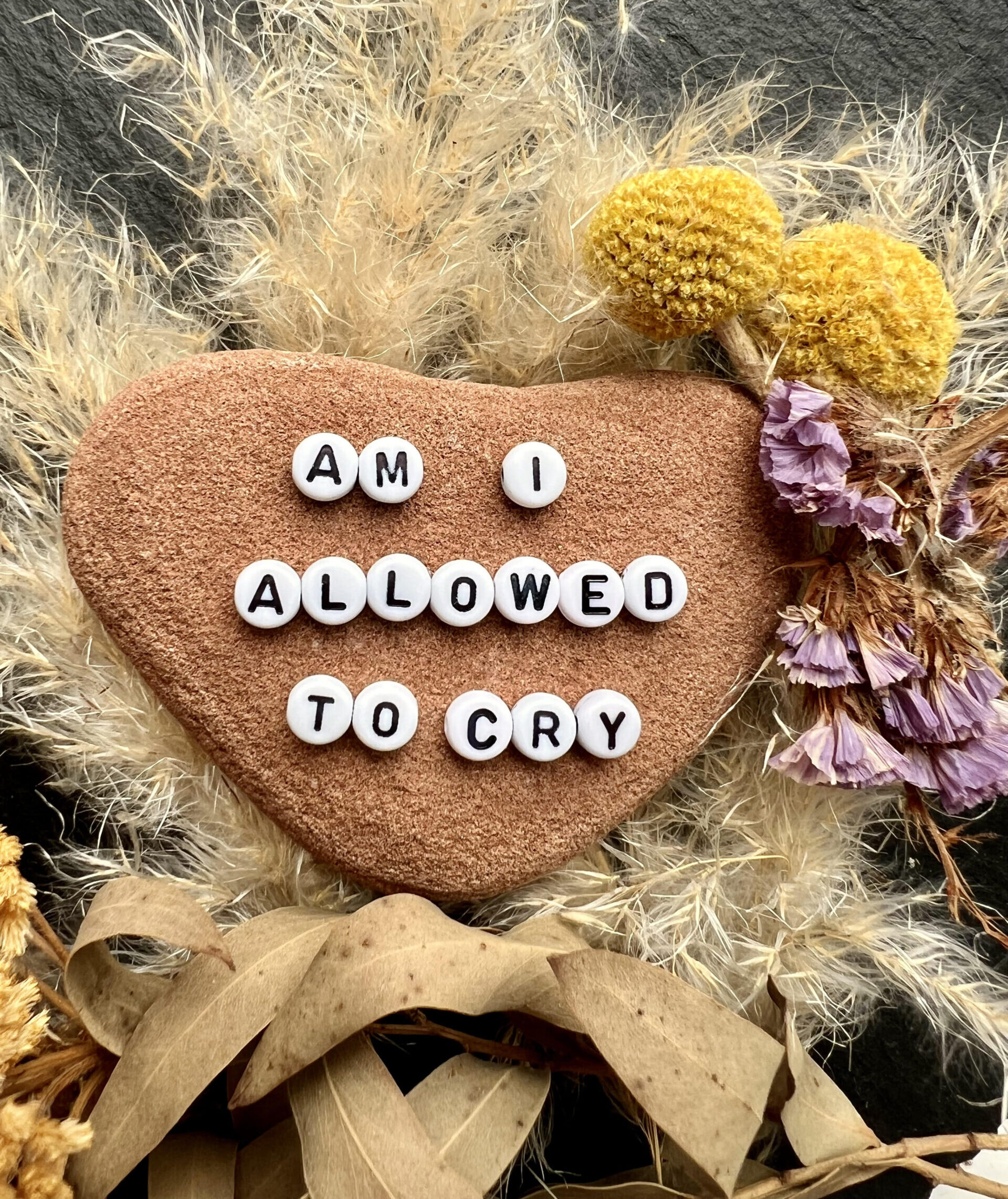
Am I allowed to cry?
For the last two years, I haven’t just been recovering from a concussion; I have been navigating the five stages of grief.
Stage One: Denial
“Just breathe, just relax, it’ll be okay.” 1
My denial began the second the accident happened. At the time, I didn’t understand what a concussion was; I only knew my reality as a teacher and a mother. In those roles, stopping isn’t an option. So, I convinced myself that if I just kept breathing and relaxing, as Taylor says, everything would be okay.
For six weeks, I pushed through. That’s what teachers and mothers do. We carry on so others don’t have to. I kept teaching, determined not to let my “burden” fall on colleagues or students. At home, I stayed fully present, refusing to let my children see me struggle. I thought if I ignored the symptoms long enough or kept my mind sufficiently distracted and entertained, they would eventually leave. But Post-Concussion Syndrome doesn’t work that way. While I was busy pretending to be fine, I was falling apart.
I was in complete denial that this was a life-altering injury.
Stage Two: Anger
“now I breathe flames each time I talk
my cannons all firin’ at your yacht
they say, “move on” but you know, I won’t.” 2
After my denial, I reached a breaking point, and my GP signed me off work. I was referred to a brain injury service and thought I was finally in the right hands. Instead, the medical gaslighting began and with it, the stage of anger.
My neurological and vestibular issues were minimised and treated as purely psychological. Being offered antidepressants instead of rehabilitation left me raging. Like the lyrics in mad woman, I felt like I was ‘breathing flames’ every time I tried to advocate for myself. I spent the next 18 months ‘firin’ my cannons,‘ refusing to accept their narrative and pushing for the specialists I believed held the real answers.
Stage Three: Bargaining
“I can’t speak afraid to jinx it
I don’t even dare to wish it.” 3
During this bargaining stage, I relied on three things: knowledge, hope, and effort.
I became an expert in my own trauma, diving into podcasts on concussions and vestibular issues. They taught me that help existed, but the challenge was to find the one specialist who actually understood.
Hope became my engine, but also my greatest vulnerability. Like the lyrics in Snow on the Beach, I was ‘afraid to jinx it.’ I didn’t ‘dare to wish’ for a definitive answer. I kept my expectations low as a form of protection; I was terrified that if I let myself believe in a cure, the inevitable disappointment would shatter me.
I was willing to do anything for a result. I spent hours researching, travelling across England for appointments, and bracing myself against the endless NHS waiting times. I assumed that if I just put in enough effort, the system would reward me with an answer.
However, a quiet realisation hit me during a long-awaited appointment. The specialist handed me some leaflets. As I looked down, I realised I had already read them a year ago through my own research. Driving home that day, the truth settled in. I knew I was never going to get answers through the NHS.
Yet I continued because my knowledge, hope, and effort were immense, even though I knew, deep down, they weren’t enough to fix a broken system.
Stage Four: Depression
“He sent me ‘Downtown Lights’
I hadn’t heard it in a while
Am I allowed to cry?” 4
After years of fighting, I finally found a consultant who offered genuine empathy. But that connection led to a devastating conclusion. He looked me in the eye and said the words I wasn’t prepared for: “There is nothing more we can do. You need to adapt to your new reality.”
Those words ‘sent me ‘Downtown Lights’.‘ They triggered a profound cycle of grief I hadn’t realised I was already living. In that moment, I felt a sadness so deep it echoed Taylor’s final question in Guilty as Sin?: ‘Am I allowed to cry?’
During this time, I struggled with an internal conflict. Those around me were focused on “moving forward,” and I felt a constant, heavy pressure to stay positive. But I knew this deep sadness was necessary; I needed to feel it to move through it.
For years, I had suppressed everything because I couldn’t afford to “waste” limited energy on processing my pain. I had gone numb, focusing entirely on being a good mum while recovering from a brain injury and managing the pressures of my employer and the NHS. I held myself together because I thought it was the only way to survive.
Slowly, the numbness broke. Taylor’s question became my daily internal monologue. I was finally allowing myself to mourn. I had to learn that it was okay to be devastated by everything I had lost.
Stage Five: Acceptance
“sometimes, givin’ up is the strong thing
sometimes, to run is the brave thing
sometimes, walkin’ out is the one thing
that will find you the right thingand you know in your soul
when it’s time to go.” 5
I am not fully at this stage yet because I am still asking myself, ‘Am I allowed to cry?‘
When I finally reach a place of peace, I will write a full post about what acceptance really means to me.
Right now, I think acceptance means taking a break. I am completely burned out and traumatised by a medical system that hasn’t provided the answers I needed. Perhaps the ‘brave thing‘ isn’t pushing for another referral, but walking away from the appointments to protect my own mental health. Because I know, in my soul, that it’s time to go.
Until then, I hope my words help you make sense of your own journey.
The Concussion Girl
- Swift, Taylor. ‘Electric Touch’, From the Vault, Speak Now, Taylor’s Version. Taylor Swift, 2023. ↩︎
- Swift, Taylor. ‘mad woman’, folklore. Taylor Swift, 2020. ↩︎
- Swift, Taylor. ‘Snow on the Beach’, Midnights. Taylor Swift, 2022. ↩︎
- Swift, Taylor. ‘Guilty as Sin’, The Tortured Poets Department. Taylor Swift, 2024 ↩︎
- Swift, Taylor. ‘it’s time to go’, evermore. Taylor Swift, 2020. ↩︎
Comments
Good question. Another one: Are we allowed to feel sad or angry?
Absolutely. I’m learning that grief is definitely not linear. One day I’m asking myself ‘Am I allowed to cry?’, the next I’m ‘firin’ my cannons’ in anger.
Even on the days when I know in my soul ‘it’s time to go’, I sometimes wake up wanting to fight the system all over again.
It’s a constant cycle, but I think I have to be allowed to feel all of it to eventually find my way through.